Main course · Basque, old cow
Chuletón
Chuletón, or txuleta in Basque, is a bone-in rib steak 4–6 cm thick, traditionally from older cows or oxen, grilled over hot embers with coarse salt; it is the centerpiece of the Basque grill house and cider house meal. The intense heat browns the outside deeply while the inside stays red.
At a glance
- Origin
- Basque Country, Spain
- Cut
- Bone-in rib steak (lomo alto)
- Thickness
- 4–6 cm / 1½–2½ in, 1–1.5 kg / 2.2–3.3 lb
- Doneness
- Rare: core 45–50 °C / 113–122 °F
- Serves
- 2–3
- Time
- 2 h tempering, 15–20 min on the grill
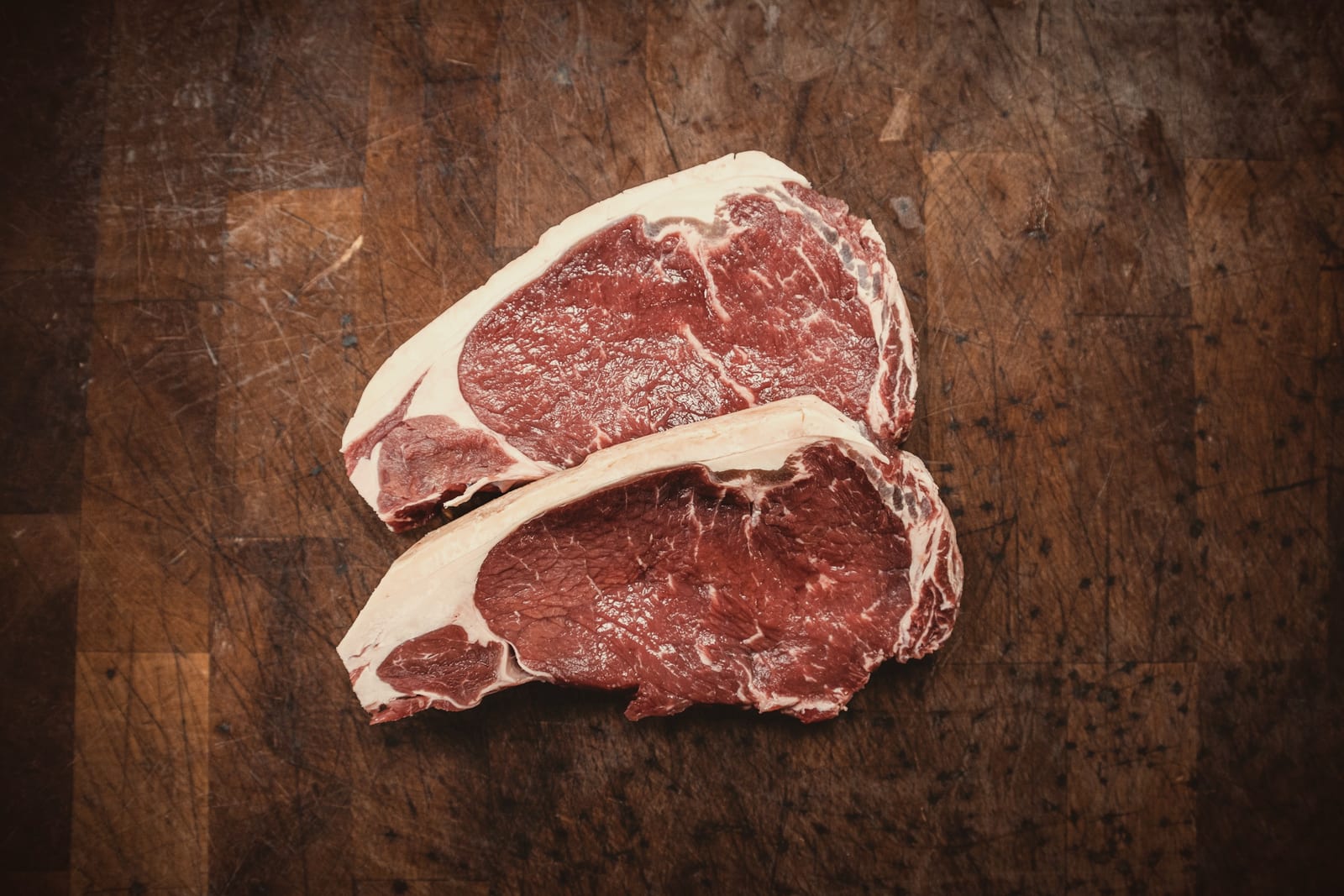
A ribeye on the bone, 4–6 cm thick
A chuletón is cut from the lomo alto, the rib section of the loin, with the bone left on: in effect a very thick bone-in ribeye, sometimes extending into the lomo bajo (striploin). It is cut 4–6 cm / 1½–2½ in thick and usually weighs 1–1.5 kg / 2.2–3.3 lb, a steak meant to be shared.
The preparation is minimal: the meat is brought to room temperature, salted heavily with coarse salt, cooked fast over intense embers so that the outside is deeply browned and the inside stays red, then sliced at the table. Basque cooks talk about the meat more than the recipe: the age of the animal, its fat and the days of dry aging.
Asadores and the cider-house menu
Grilling over wood and charcoal is old in the Basque Country, but the chuletón as a restaurant dish took shape in the 20th century in the asadores, grill houses of Gipuzkoa and Bizkaia that cook fish and meat over embers on adjustable or inclined grills. The steak became the standard main course of the sagardotegi (cider house) menu, especially around Astigarraga and Hernani: salt-cod omelette, salt cod with green peppers, txuleta, and Idiazabal cheese with quince paste and walnuts, eaten standing between visits to the barrels during the txotx season, roughly January to April.
In Spanish the name says chuletón de buey, "of ox", but true oxen (castrated working males) became rare after farm mechanization, and most chuletones come from cows. In recent decades Basque grill cooks and butchers have prized vaca vieja, "old cow": animals of eight years or more, often of the Galician Rubia Gallega breed or of dairy and other breeds from Galicia, Portugal and elsewhere in Europe, fattened again before slaughter. Their meat is darker, with yellow fat and a stronger flavor, and is usually dry-aged for several weeks. How much age improves flavor is debated, and the name vaca vieja is not a protected label.
Ingredients
| Ingredient | Amount | Note |
|---|---|---|
| Bone-in rib steak (chuletón) | 1, about 1.2 kg / 2.6 lb | 5 cm / 2 in thick; dry-aged if possible |
| Coarse sea salt | about 2% of the weight, 20–25 g / ¾ oz | flaky or coarse grains |
| Hardwood charcoal or embers | a deep, even bed | oak, holm oak or vine cuttings |
| Piquillo or green peppers (optional) | to taste | the usual side |
Method
- Take the steak out of the refrigerator about 2 hours before cooking so it reaches room temperature through to the bone. Pat it dry; do not oil or marinate it.
- Prepare a bed of glowing embers with no flame. The grill should be very hot; many Basque grills are inclined so the fat runs off instead of dripping into the coals and flaring.
- Salt the steak generously on both faces just before it goes on the grill, or salt during cooking, as many grill cooks do.
- Stand the steak briefly on its fat edge to render and brown it. Then grill the first side 5–7 minutes, until a dark crust forms, and turn once with tongs.
- Grill the second side 5–7 minutes. Check the core near the bone: 45–50 °C / 113–122 °F gives the rare result that is traditional. Shake off excess salt.
- Rest for 3–5 minutes, cut the meat away from the bone, and slice it across the grain into strips about 2 cm / ¾ in thick. Reassemble it beside the bone.
- Serve on a very hot plate or iron griddle, so each diner can sear the slices a little more to taste.
Young beef, old cow, ox
The main variable is the animal: young beef (ternera or añojo) gives a milder, paler chuletón, while vaca vieja and ox give a darker and more intense one. Aging ranges from none to more than 60 days in some grill houses. Outside the Basque Country, Castile and Galicia have their own steak traditions with the same cut. The chuletón shares its logic with the Tuscan bistecca alla fiorentina, which uses the T-bone instead of the rib, and with the very thick bone-in steaks of the Argentine asado, cooked over gentler heat.
Salt only, or piquillos and Rioja
In a cider house the txuleta is served with nothing but salt; in grill houses it comes with roasted piquillo peppers, fried green Gernika peppers, lettuce salad or fried potatoes, and Rioja or another red wine where cider is not the drink. Common mistakes: cooking it straight from the refrigerator, which leaves a cold center; using flame instead of embers, which soots the meat; turning it many times or piercing it; under-salting a steak this thick; and cooking it past medium, which a well-aged chuletón does not tolerate.
Frequently asked questions
What is the difference between chuletón and ribeye?
A chuletón is a bone-in rib steak cut much thicker, 4–6 cm / 1½–2½ in, usually from older animals, grilled whole and shared.
What is vaca vieja?
"Old cow": beef from cows of eight years or more, fattened before slaughter and usually dry-aged, prized in Basque grill houses for its flavor.
How is chuletón cooked in the Basque Country?
Over hot embers, salted with coarse salt, a few minutes per side, served rare and sliced off the bone on a hot plate.
What is a txuleta?
The Basque name for the chuletón, the bone-in rib steak served in grill houses and cider houses.
Sources
4
- McGee, Harold. On Food and Cooking: The Science and Lore of the Kitchen, rev. ed. New York: Scribner, 2004.
- Dashdorj, Dashmaa; Tripathi, Vinay K.; Cho, Soohyun; Kim, Younghoon; Hwang, Inho. "Dry aging of beef; review." Journal of Animal Science and Technology 58 (2016): 20. doi.org/10.1186/s40781-016-0101-9
- Roden, Claudia. The Food of Spain. New York: Ecco, 2011.
- Davidson, Alan. The Oxford Companion to Food. Oxford: Oxford University Press, 1999.
Related