Origin · Argentina, the Pampas
Argentine beef
Argentine beef is beef from cattle raised in Argentina, above all on the temperate grasslands of the Pampas, historically from British breeds — Angus, Hereford and Shorthorn — finished on pasture. A mild climate and rain through the year let cattle graze outdoors all year round; for more than a century it has been one of the world’s best-known beef origins and the basis of the asado.
At a glance
- Main region
- The Pampas (Buenos Aires, Santa Fe, Córdoba, La Pampa, Entre Ríos)
- Main breeds
- Angus, Hereford, Shorthorn; Braford and Brangus in the north
- EU Hilton quota
- 29,500 t a year
- Promotion body
- IPCVA (since 2002)
- Typical cooking
- Asado, on a parrilla over wood embers
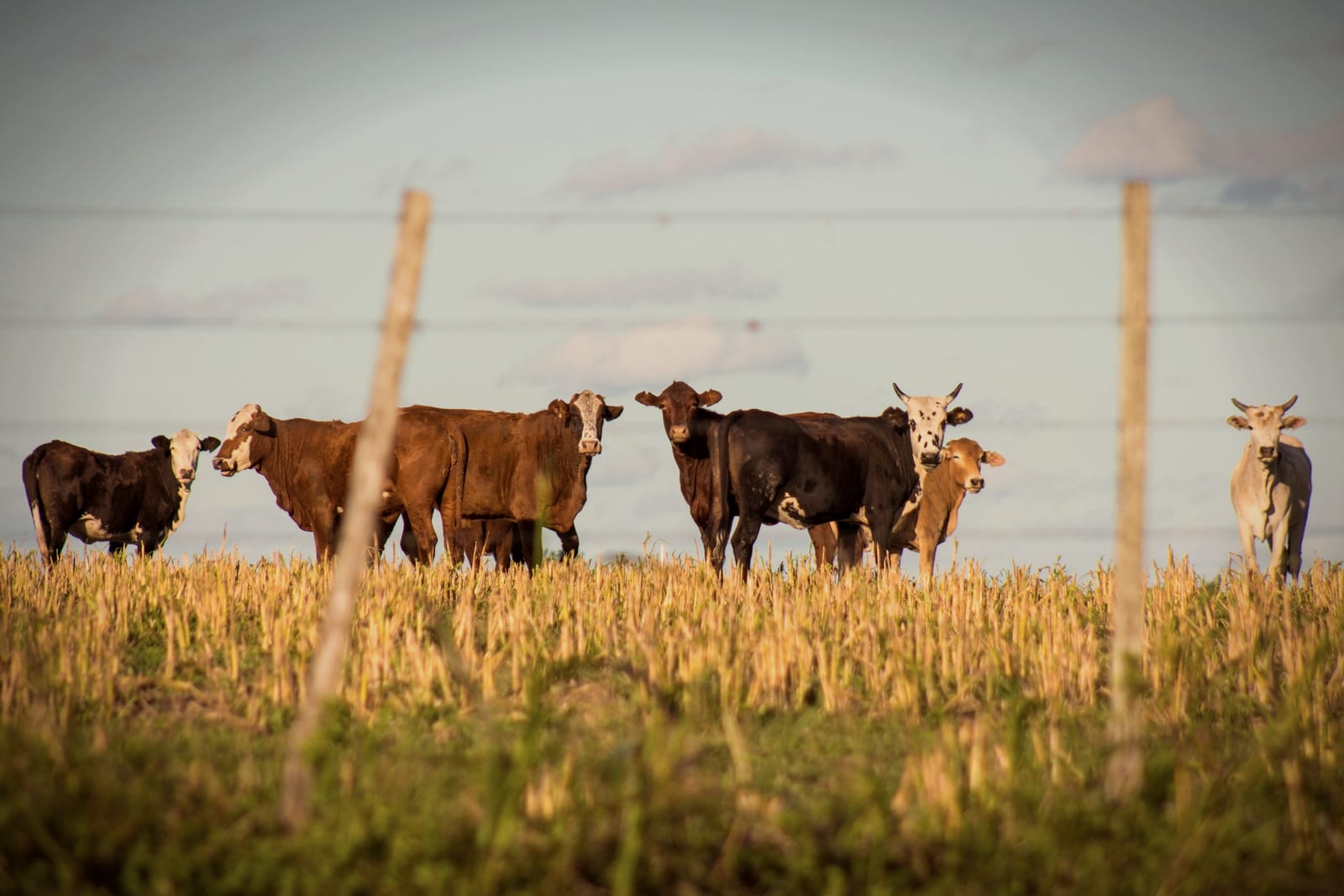
Grass all year on the Pampas
The Pampas are a vast, flat, fertile plain of natural grassland stretching across Buenos Aires Province and parts of Santa Fe, Córdoba, La Pampa and Entre Ríos. A mild climate, rain spread through the year and deep soils let cattle graze outdoors all year round, which made beef the country’s defining product for most of its history.
The classic Argentine animal is a young steer or heifer of British breed — Angus above all, then Hereford and Shorthorn — finished on pasture. In the north, where heat and parasites are harder on British cattle, crosses with zebu breeds such as Brangus and Braford are common. Since the 2000s a large share of cattle for the domestic market is finished in feedlots (engorde a corral) for the final months, so “Argentine” no longer automatically means “grass-finished”; see Grass-fed vs grain-fed.
From feral herds to the frigoríficos
Cattle arrived with the Spanish in the sixteenth century. Animals that escaped or were left behind multiplied into huge feral herds (ganado cimarrón) on the open plain, hunted by vaquerías for hides and tallow; the meat was often left behind. From the late eighteenth century, saladeros salted and dried beef as tasajo, exported mainly to Brazil and the Caribbean.
The modern industry began with improved breeds and refrigeration. Shorthorn arrived in 1826, Hereford in the following decades and Angus in 1879. In 1876 the French ship Le Frigorifique showed that meat could cross the ocean refrigerated, and from 1882 refrigerated meat plants (frigoríficos), largely British and later American-owned, were built along the rivers. Frozen and then chilled beef shipped to Britain made Argentina one of the world’s leading beef exporters in the early twentieth century and shaped the country’s economy, its railways and its politics.
Exports declined from the mid-twentieth century as domestic consumption grew and markets closed. Per-capita consumption in Argentina has long been among the highest in the world. In recent decades exports have recovered, with China the largest buyer by volume, mostly of frozen cow beef, while the European Union remains the premium market for chilled steer cuts.
Cría, invernada, and no marbling grade
Breeding (cría) is concentrated on poorer grasslands; calves are then reared and finished (invernada) on better pasture, sown pasture or in feedlots. The domestic market prefers light, young animals — ternero, novillito, vaquillona — while export favours heavier steers (novillo).
Argentina classifies carcasses by category (age and sex) and by conformation and fat, in an official system run by the national authorities; it does not grade marbling in the way of the American or Japanese systems (see Grading systems). The Instituto de Promoción de la Carne Vacuna Argentina (IPCVA), created in 2002 and funded by producers and packers, promotes the beef abroad and publishes the official nomenclature of cuts.
The Hilton quota
The Hilton quota is a tariff-rate quota for high-quality beef that the European Community opened in 1979 after the Tokyo Round of the GATT; the name is generally attributed to a negotiating meeting held at a Hilton hotel. It allows set volumes of premium boneless beef to enter the European Union at a reduced tariff. Argentina holds the largest national allocation, 29,500 tonnes a year, for chilled cuts from steers and heifers raised on pasture and meeting set specifications. Shipments are certified animal by animal and are a benchmark of the country’s top export beef.
The criollo cuts
Argentine butchery divides the carcass differently from the American, British or French systems, and many of its cuts have become known abroad under their Spanish names. The table gives the closest equivalents; boundaries between systems are rarely exact.
| Argentine cut | Closest equivalent | On the grill |
|---|---|---|
| Bife de chorizo | Striploin / New York strip | Thick steak, the classic of the parrilla |
| Ojo de bife | Ribeye | Steak, boneless |
| Lomo | Tenderloin | Whole or as steaks |
| Vacío | Flank (with its membrane and fat) | Slow over low embers |
| Entraña | Outside skirt | Fast, over high heat |
| Tapa de cuadril | Rump cap / picanha | With its fat cap |
| Tira de asado | Short ribs, cut across the bone | The core of the asado |
Three meanings on a menu abroad
Detail on each cut: striploin, ribeye, tenderloin, flank, skirt and picanha.
“Argentine beef” on a menu abroad may mean imported Argentine beef, beef cut in the Argentine way, or simply grilled beef served in an Argentine style. Only the first is a statement of origin, and imported product carries the exporting plant’s official establishment number on the box.
Not all grass-fed, and not a breed
All Argentine beef is grass-fed. Historically most was; today much of the domestic supply is feedlot-finished, while export programmes such as the Hilton quota require pasture.
Argentine beef is a breed. It is an origin. The animals are mostly British breeds and their crosses.
Frequently asked questions
Why is Argentine beef famous?
A century of British-breed cattle raised on the natural grasslands of the Pampas, a long export history to Britain and Europe, and a national grilling culture built around the asado.
Is Argentine beef grass-fed?
Traditionally yes, and export programmes such as the EU Hilton quota require pasture-raised cattle, but since the 2000s much of the beef sold inside Argentina is finished in feedlots.
What is the Hilton quota?
A European Union tariff-rate quota for high-quality beef, opened in 1979; Argentina’s allocation is 29,500 tonnes a year of chilled cuts from pasture-raised steers and heifers.
What is bife de chorizo?
The Argentine name for a thick steak from the striploin, the equivalent of a New York strip; it is the classic steak of the Argentine parrilla.
Sources
5
- Instituto de Promoción de la Carne Vacuna Argentina (IPCVA). Cortes de carne vacuna argentina — nomenclatura y usos. Buenos Aires. www.ipcva.com.ar
- Giberti, Horacio C. E. Historia económica de la ganadería argentina. Buenos Aires: Raigal, 1954.
- European Commission. Commission Regulation (EC) No 810/2008 opening and providing for the administration of tariff quotas for high-quality fresh, chilled and frozen beef and for frozen buffalo meat. Brussels, 2008.
- Mallmann, Francis; Kaminsky, Peter. Seven Fires: Grilling the Argentine Way. New York: Artisan, 2009.
- Cámara de la Industria y Comercio de Carnes y Derivados de la República Argentina (CICCRA). Informe económico mensual. Buenos Aires, 2024.
Related