Read in: EspañolTiếng Việt
Home›Steakhouses›Tokyo
Japan
Steakhouses in Tokyo
Tokyo's beef restaurants fall into three traditions: teppanyaki counters where a chef cooks Japanese Wagyu on an iron griddle in front of the guest, yakiniku restaurants where diners grill sliced beef at the table, and American-style steakhouses serving dry-aged USDA Prime beef.
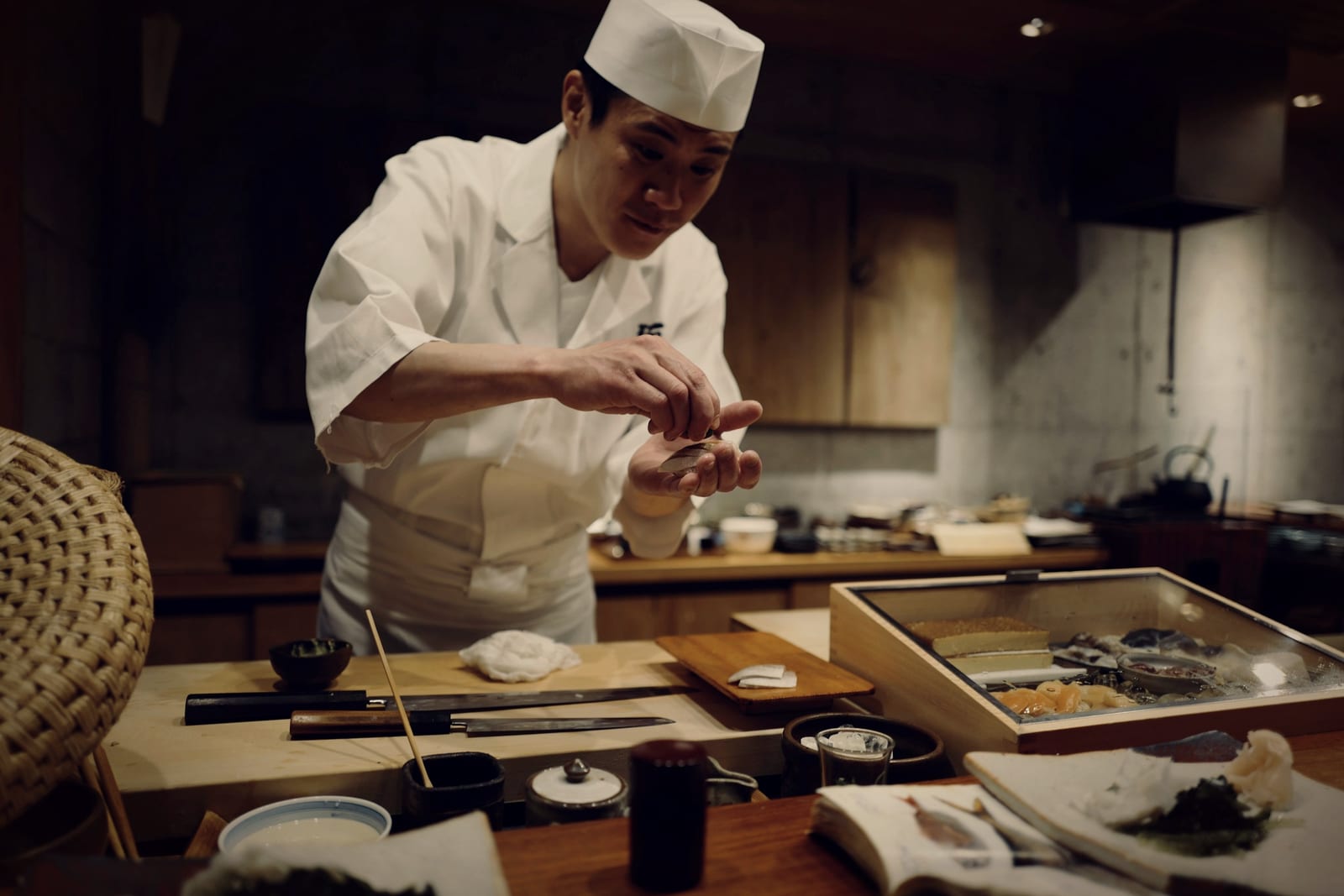
Japanese beef dominates the city's menus. Most top restaurants serve Wagyu from the Japanese Black breed, often sold under regional brands such as Kobe beef (Tajima cattle from Hyōgo), Matsusaka (Mie) and Ōmi (Shiga), the trio commonly called the sandai wagyu. Carcasses are graded by the Japan Meat Grading Association: a letter from A to C for yield (A is above 72 % usable meat) and a number from 1 to 5 for quality, with marbling scored on the Beef Marbling Standard (BMS) from 1 to 12. A5 means yield grade A and quality grade 5, which requires a BMS of 8 to 12.
Teppanyaki, steak cooked on a flat iron plate, is credited to Misono in Kobe, which says it began serving steak this way in 1945. In Tokyo the style is concentrated in Ginza, Roppongi and hotel restaurants, and several counters specialise in one regional beef, such as Akita or Yamagata Wagyu. Yakiniku, of Korean origin, is found across the city; this list includes yakiniku houses from Hongo and Ichigaya to Minami-Aoyama and Nishi-Azabu.
American steakhouse brands arrived from 2007, when Ruth's Chris opened in Kasumigaseki; Wolfgang's, BLT Steak, Benjamin and Lawry's followed, and in 2021 Peter Luger opened in Ebisu its first restaurant outside the United States. These houses grill USDA Prime beef under high-temperature broilers and several dry-age it in house for about 28 days. Charcoal grilling over binchōtan, used at places such as Aragawa (opened 1967), links the steakhouse and the Japanese kappō counter.
Also in the city: large chains such as Ikinari! Steak, Volks, Sizzler, Outback Steakhouse and Morton's, and yakiniku groups such as Jojoen, Kintan and Ushigoro, which are not listed individually here.
Listed by name, never by payment or score. Facts last verified: 20 Oct 2026.
-
Aragawa
Nishi-Shinbashi · Est. 1967
Aragawa
Onarimon Odakyu Building 1F, 3-23-11 Nishi-Shinbashi, Minato-ku, Tokyo
Style Teppanyaki Price $$$$ Fire charcoal Beef Japan (Hyōgo) · Tajima (Japanese Black) Founded 1967 Why it is listedOpened on 12 June 1967 and at its current Nishi-Shinbashi address since January 2009; grills Tajima beef over binchōtan charcoal; Tabelog 100 Steak & Teppanyaki EAST 2025.
Sources: award.tabelog.com · tabelog.com · hot-dinners.com · andyhayler.com
Not yet verified: aging
-
Benjamin Steakhouse Roppongi
Roppongi · Est. 2017
Benjamin Steakhouse Roppongi
Rem Roppongi Building B1F, 7-14-4 Roppongi, Minato-ku, Tokyo
Style American chophouse Beef United States · USDA Prime Aging dry-aged · 28+ days Founded 2017 Why it is listedTokyo branch of the New York steakhouse, opened on 30 June 2017; dry-ages USDA Prime beef for at least four weeks and cooks it under a deck broiler; Tabelog 100 Steak & Teppanyaki EAST 2025.
Sources: award.tabelog.com · tabelog.com
Not yet verified: fire, price
-
BLT Steak Roppongi
Roppongi · Est. 2014
BLT Steak Roppongi
Izumi Garden 5F, 1-6-1 Roppongi, Minato-ku, Tokyo
Style American chophouse Beef Prime Aging dry-aged Founded 2014 Why it is listedOpened on 19 September 2014; dry-aged prime beef cooked in a high-temperature steak oven; Tabelog 100 Steak & Teppanyaki EAST 2025.
Sources: award.tabelog.com · tabelog.com
Not yet verified: fire, price
-
Ginza Gomei (Akita Gyu Teppanyaki)
Ginza · Est. 2015
Ginza Gomei (Akita Gyu Teppanyaki)
Maxido Pier Building B1F, 6-4-18 Ginza, Chuo-ku, Tokyo
Style Teppanyaki Beef Japan (Akita) · Japanese Black · A4–A5 · feed includes rice (as stated by the restaurant) Founded 2015 Why it is listedTeppanyaki counter serving only Akita beef of A4 and A5 grade, opened on 15 October 2015; first entry on the Tabelog 100 Steak & Teppanyaki EAST 2025 list.
Sources: award.tabelog.com · tabelog.com
Not yet verified: fire, aging, price
-
Ginza Ukai-tei
Ginza
Ginza Ukai-tei
Jiji Tsushin Building 1F, 5-15-8 Ginza, Chuo-ku, Tokyo
Style Teppanyaki Why it is listedTeppanyaki restaurant of the Ukai group, which began in Hachiōji in 1964 and opened its first Ukai-tei there in December 1974; Tabelog 100 Steak & Teppanyaki EAST 2025.
Sources: award.tabelog.com · tabelog.com · edinetdb.jp
Not yet verified: fire, beef, aging, founded, price
-
Kato Gyuniku-ten Ginza
Ginza
Kato Gyuniku-ten Ginza
Tony Building 1F, 6-4-15 Ginza, Chuo-ku, Tokyo
Style Other Beef Japan (Yamagata) · A5, BMS 11 or higher (heifers) Why it is listedSteakhouse of a butcher founded in Yokohama in 1930; serves Yamagata beef from heifers graded A5 with BMS 11 or higher, bought at the Yamagata meat market; Tabelog 100 Steak & Teppanyaki EAST 2025.
Sources: award.tabelog.com · tabelog.com
Not yet verified: fire, founded, price
-
Kawamura
Ginza
Kawamura
Ginza, Chuo-ku, Tokyo (street address not published)
Style Other Why it is listedSeven-seat steak counter taking bookings by referral only; Tabelog Award Silver 2026 and Tabelog 100 Steak & Teppanyaki EAST 2025.
Sources: award.tabelog.com · tabelog.com
Not yet verified: fire, beef, aging, founded, price
-
Keyakizaka (Grand Hyatt Tokyo)
Roppongi
Keyakizaka (Grand Hyatt Tokyo)
Grand Hyatt Tokyo 4F, Roppongi Hills, 6-10-3 Roppongi, Minato-ku, Tokyo
Style Teppanyaki Beef Japan (Tokyo) · Japanese Black · A4–A5 · custom feed based on that of Akikawa beef, including quinoa, cacao, blueberries and seaweed (as stated by the restaurant) Why it is listedTeppanyaki restaurant of the Grand Hyatt Tokyo serving its own 'Keyakizaka Beef', raised on a feed developed from Akikawa beef, Tokyo's own beef brand; Tabelog 100 Steak & Teppanyaki EAST 2025.
Sources: award.tabelog.com · tabelog.com
Not yet verified: fire, aging, founded, price
-
Lawry's The Prime Rib Akasaka
Akasaka · Est. 2017
Lawry's The Prime Rib Akasaka
Akasaka Intercity AIR 3F, 1-8-1 Akasaka, Minato-ku, Tokyo
Style American chophouse Beef United States Founded 2017 Why it is listedOpened on 29 September 2017; slow-roasted prime rib of American beef carved at the table from a silver cart; Tabelog 100 Steak & Teppanyaki EAST 2025.
Sources: award.tabelog.com · tabelog.com
Not yet verified: fire, aging, price
-
 101 Best
Nikuya Tanaka
Ginza · Est. 2019 · Closed
101 BestNikuya Tanaka
GICROS GINZA GEMS 9F, 6-4-3 Ginza, Chuo-ku, Tokyo
Style Other Price $$$$ Fire charcoal Beef Japan (Hyōgo, Mie) · Tajima (Japanese Black) Founded 2019 Why it is listedListed in World's 101 Best Steak Restaurants 2025 at No. 27; opened on 16 November 2019; Tabelog shows the Ginza address as permanently closed (checked 20 October 2026, closing date not published).
Sources: tabelog.com · enprimeurclub.com · zhcn.jal.japantravel.com
Not yet verified: aging
-
Ochiai Rou Steak House Tokyo
Azabudai · Est. 2023
Ochiai Rou Steak House Tokyo
Azabudai Hills Tower Plaza 3F, 1-3-1 Azabudai, Minato-ku, Tokyo
Style Teppanyaki Beef Japan · Japanese Black Founded 2023 Why it is listedSixteen-seat teppanyaki counter in Azabudai Hills, opened on 24 November 2023 with a menu supervised by chef Hokuto Hasegawa; Tabelog 100 Steak & Teppanyaki EAST 2025.
Sources: award.tabelog.com · tabelog.com
Not yet verified: fire, aging, price
-
101 Best
Okadamae (Niku Kappo Okadamae)
Azabu-Juban
101 BestOkadamae (Niku Kappo Okadamae)
Rune Azabujuban Building B1F, 1-5-23 Azabujuban, Minato-ku, Tokyo
Style Other Price $$$$ Fire charcoal Beef Japan (Hyōgo, Mie, Shiga, Miyagi) Why it is listedListed in World's 101 Best Steak Restaurants 2025 at No. 86; a kappō counter run by chef Kenichiro Okada serving Kobe, Matsusaka, Ōmi and Sendai beef, with steak cooked in a Spanish charcoal oven.
Sources: enprimeurclub.com · enprimeurclub.com 2 · savorjapan.com
Not yet verified: aging, founded
What to order
Nearby
-
Omotesando Ukai-tei
Jingumae (Omotesando) · Est. 2007
Omotesando Ukai-tei
Omotesando GYRE 5F, 5-10-1 Jingumae, Shibuya-ku, Tokyo
Style Teppanyaki Beef Japan · Japanese Black Founded 2007 Why it is listedOpened on 2 November 2007 in the GYRE building on Omotesando; part of the Ukai group; Tabelog 100 Steak & Teppanyaki EAST 2025.
Sources: award.tabelog.com · tabelog.com
Not yet verified: fire, aging, price
-
Peter Luger Steak House Tokyo
Ebisu · Est. 2021
Peter Luger Steak House Tokyo
4-19-19 Ebisu, Shibuya-ku, Tokyo
Style American chophouse Price $$$ Beef United States · USDA Prime Aging dry-aged Founded 2021 Why it is listedThe first Peter Luger restaurant outside the United States, opened on 14 October 2021; dry-ages USDA Prime beef in a dedicated aging room following the Brooklyn method; Tabelog 100 Steak & Teppanyaki EAST 2025.
Sources: award.tabelog.com · tabelog.com · peterluger.co.jp · timeout.com
Not yet verified: fire
-
Ruth's Chris Steak House Tokyo
Kasumigaseki · Est. 2007
Ruth's Chris Steak House Tokyo
Tokyo Club Building 1F, 3-2-6 Kasumigaseki, Chiyoda-ku, Tokyo
Style American chophouse Beef United States · USDA Prime Founded 2007 Why it is listedOpened on 25 October 2007; wet-aged USDA Prime beef cooked in a broiler at 980 °C / 1,796 °F and served on a plate heated to 260 °C / 500 °F; Tabelog 100 Steak & Teppanyaki EAST 2025.
Sources: award.tabelog.com · tabelog.com
Not yet verified: fire, price
-
Seiyo Ryori Shima
Nihonbashi · Est. 1991
Seiyo Ryori Shima
B1F, 3-5-12 Nihonbashi, Chuo-ku, Tokyo
Style Other Fire charcoal Beef Japan Founded 1991 Why it is listedOpened in 1991 by chef Manabu Oshima; known for its Wagyu steak sandwich; Tabelog 100 Steak & Teppanyaki EAST 2025.
Sources: award.tabelog.com · tabelog.com · enprimeurclub.com · notoriousfoodie.substack.com
Not yet verified: aging, price
-
101 Best
Sugita (Restaurant Sugita)
Shinbashi · Est. 1961
101 BestSugita (Restaurant Sugita)
VORT Shinbashi NEX 1F, 5-13-10 Shinbashi, Minato-ku, Tokyo
Style Other Founded 1961 Why it is listedListed in World's 101 Best Steak Restaurants 2025 at No. 98; founded in Osaka in 1961 and now in Shinbashi, Tokyo; known for its Wagyu cutlet sandwich.
Sources: enprimeurclub.com · zhcn.jal.japantravel.com · byfood.com
Not yet verified: fire, beef, aging, price
-
Sumibi Yakiniku Nakahara
Ichigaya · Est. 2014
Sumibi Yakiniku Nakahara
GEMS Ichigaya 9F, 4-3 Rokubancho, Chiyoda-ku, Tokyo
Style Yakiniku Fire charcoal Beef Japan · Japanese Black Founded 2014 Why it is listedCharcoal yakiniku restaurant opened on 13 November 2014; Tabelog Award Bronze every year from 2019 to 2026 and Tabelog 100 Yakiniku Tokyo 2025.
Sources: award.tabelog.com · tabelog.com
Not yet verified: aging, price
-
The Innocent Carvery
Nishi-Azabu · Est. 2015
The Innocent Carvery
Calha Nishiazabu 101, 1-4-28 Nishiazabu, Minato-ku, Tokyo
Style Yakiniku Beef Japan · Wagyu Founded 2015 Why it is listedWagyu yakiniku restaurant opened on 11 December 2015; Tabelog 100 Yakiniku Tokyo every year from 2021 to 2026, ranked third on the 2025 list page.
Sources: award.tabelog.com · tabelog.com
Not yet verified: fire, aging, price
-
Wolfgang's Steakhouse Roppongi
Roppongi · Est. 2014
Wolfgang's Steakhouse Roppongi
Roppongi DUPLEX M's 1F, 5-16-50 Roppongi, Minato-ku, Tokyo
Style American chophouse Beef Prime Aging dry-aged · 28 days Founded 2014 Why it is listedOpened on 1 February 2014, one of five Wolfgang's locations in Tokyo; dry-ages prime beef for about 28 days and finishes it in a 900 °C / 1,652 °F oven; Tabelog 100 Steak & Teppanyaki EAST 2025.
Sources: award.tabelog.com · tabelog.com · wolfgangssteakhouse.jp
Not yet verified: fire, price
What to order
Nearby
-
Yakiniku Jambo Hanare
Hongo · Est. 2013
Yakiniku Jambo Hanare
Anritsu Building B1F–1F, 3-27-9 Hongo, Bunkyo-ku, Tokyo
Style Yakiniku Founded 2013 Why it is listedOpened on 18 September 2013 as an annex of the Yakiniku Jambo group; Tabelog Award Silver every year from 2019 to 2025 and Tabelog 100 Yakiniku Tokyo 2025.
Sources: award.tabelog.com · tabelog.com
Not yet verified: fire, beef, aging, price
-
Yoroniku
Minami-Aoyama · Est. 2007
Yoroniku
Luna Rossa B1F, 6-6-22 Minami-Aoyama, Minato-ku, Tokyo
Style Yakiniku Founded 2007 Why it is listedOpened on 29 April 2007; Tabelog Award Gold 2018 and Tabelog 100 Yakiniku every year from 2019 to 2026; the group also runs YORONIKU in Ebisu and Azabudai Hills.
Sources: award.tabelog.com · tabelog.com
Not yet verified: fire, beef, aging, price
Frequently asked questions
Where to eat Kobe beef in Tokyo?
Kobe beef is a certified brand of Tajima cattle raised in Hyōgo Prefecture. In this directory, Aragawa serves Tajima beef grilled over charcoal and Okadamae lists Kobe beef alongside Matsusaka, Ōmi and Sendai beef; teppanyaki counters in Ginza also serve it.
What does A5 mean on Wagyu?
It is the top Japanese carcass grade: 'A' is the yield grade (more than 72 % usable meat) and '5' is the quality grade, which requires a marbling score (BMS) of 8 to 12 on a scale of 1 to 12.
What is the difference between teppanyaki and yakiniku?
In teppanyaki a chef cooks steak and other ingredients on a flat iron griddle in front of the guest. In yakiniku the diners grill bite-size slices of beef and offal themselves over a charcoal or gas grill set into the table.
Do Tokyo steakhouses dry-age their beef?
The American-style houses do: Wolfgang's states about 28 days in a dedicated aging room and Benjamin at least four weeks; Peter Luger and BLT Steak also dry-age without publishing the number of days. Most Wagyu restaurants do not state an aging period.
Related