Cooking · Salt and nitrite
Curing
Curing is the preservation and flavouring of meat with salt, usually together with sugar and small, regulated amounts of sodium nitrite or nitrate, applied dry, in a brine or by injection. Salt lowers the water available to bacteria and firms the meat into a dense, sliceable texture; nitrite fixes the pink of ham and corned beef, gives cured flavour and protects against botulism.
At a glance
- Methods
- Dry cure, wet cure (brine), injection
- Salt
- Usually 2–3 % of the meat's weight (equilibrium)
- Curing salt #1
- 6.25 % sodium nitrite; 0.25 % of weight ≈ 156 ppm
- Curing temperature
- 1–4 °C / 34–39 °F
- Beef products
- Corned beef, pastrami, bresaola, cecina, charque, biltong, jerky
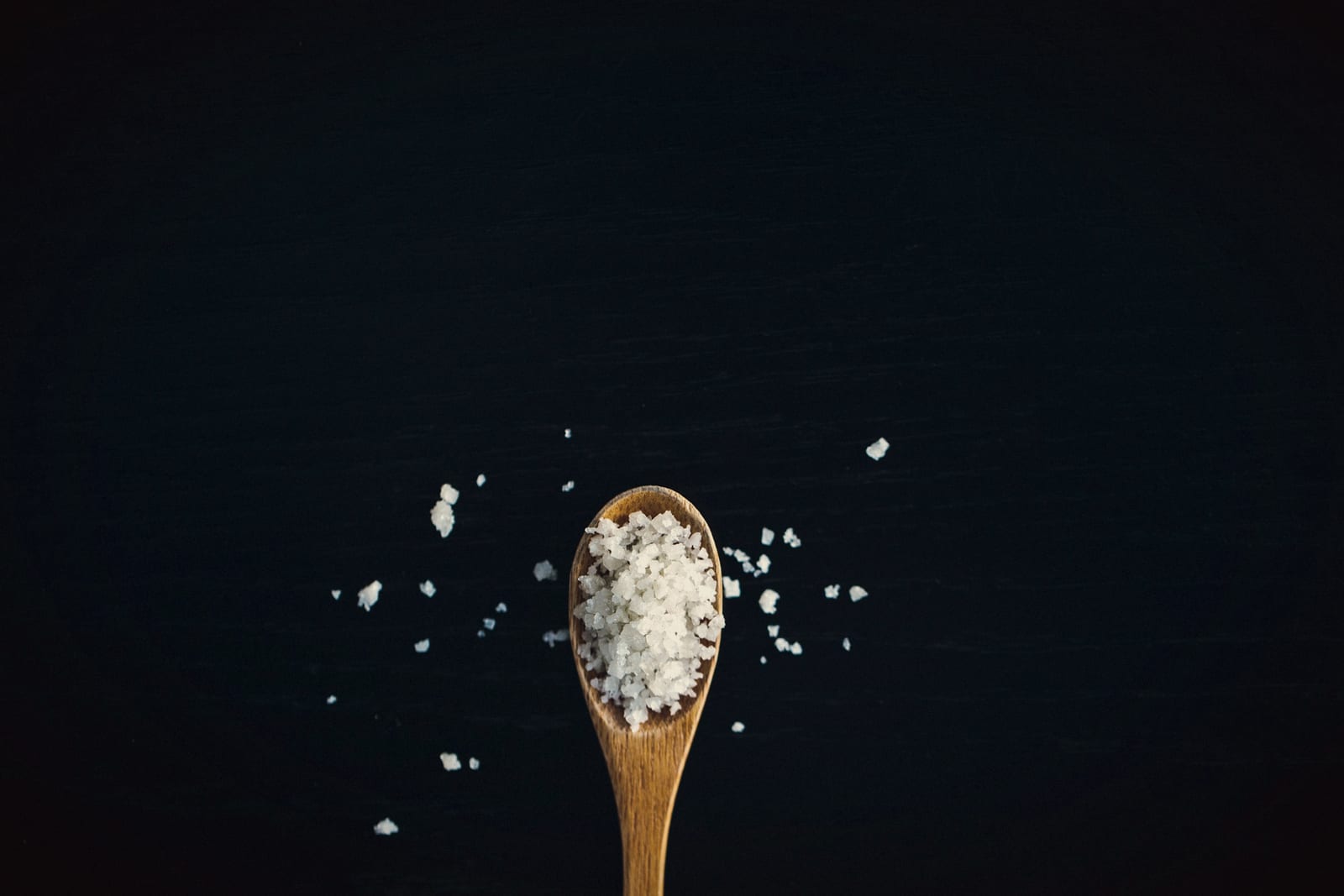
Dry, wet or injected
Curing is one of the oldest ways of keeping meat. In a dry cure, salt and seasonings are rubbed onto the surface and slowly diffuse inward; in a wet cure, the meat is submerged in a brine; in injection (pumping), brine is pushed into the muscle with needles, usually about 10 % of the meat's weight, so large pieces cure from the inside out in days instead of weeks. Many products combine curing with smoking, drying or cooking.
Beef has its own family of cured products. Corned beef and British salt beef are brined brisket, simmered; pastrami is cured, spiced, smoked and steamed. Air-dried whole muscles include Italian bresaola, protected as Bresaola della Valtellina IGP, and Spanish cecina de León, also an IGP, made from the hindquarter of adult cattle, salted, smoked with oak and cured for at least seven months. Brazil has lightly salted carne de sol and the heavily salted, sun-dried charque; South Africa has biltong, dried with vinegar and coriander; and North American jerky takes its name from the Quechua ch'arki.
What salt and nitrite each do
Salt dissolves in the meat's water and lowers its water activity, the water available to microbes, so spoilage bacteria grow slowly or not at all. It also dissolves part of the muscle proteins, which is why cured meat has a firm, dense, sliceable texture. Sugar softens the harshness of the salt and feeds the bacteria that, in long cures, convert nitrate to nitrite.
Nitrite does three things, as described by Harold McGee and in Lawrie's Meat Science. It reacts to form nitric oxide, which binds to myoglobin and gives the stable pink-red of ham and corned beef instead of the grey of cooked meat. It inhibits Clostridium botulinum, the bacterium whose toxin causes botulism, a real risk in thick, low-oxygen cured products. And it creates the characteristic cured flavour while acting as an antioxidant that prevents rancid, warmed-over notes. Nitrate does nothing by itself until bacteria reduce it to nitrite, so it is used only in long dry cures. Commercial curing salt #1 (Prague powder #1) is salt with 6.25 % sodium nitrite for short cures; curing salt #2 also contains sodium nitrate for products cured for weeks or months. Both are dyed pink because pure nitrite is toxic in small amounts.
Because of that toxicity, and because nitrite can form nitrosamines, some carcinogenic, at high heat, it is regulated. In the United States, 9 CFR 424.21 limits ingoing sodium nitrite to 156 ppm in comminuted products, 200 ppm in immersion-cured and pumped products and 625 ppm in dry-cured products, with stricter rules for bacon. The European Union, by Commission Regulation (EU) 2023/2108, lowered the maximum added nitrite for most meat products to 80 mg/kg, expressed as nitrite ion (about 120 mg/kg as sodium nitrite), applying from October 2025 with transition periods. Ascorbate or erythorbate is added to commercial cures to speed colour formation and reduce nitrosamines. Products labelled 'uncured' or 'no added nitrite' are usually cured with celery powder, a natural source of nitrate that cultures convert to nitrite, as reviewed by Sebranek and Bacus. The International Agency for Research on Cancer classifies processed meat, including cured meat, as carcinogenic to humans.
Equilibrium curing is the modern way to get consistent results. Instead of packing meat in excess salt and guessing the time, the cook weighs the meat (plus the water, in a brine) and adds exact percentages: typically 2–3 % salt, 0.5–2 % sugar and 0.25 % curing salt #1, which gives about 156 ppm of nitrite. Left long enough, the cure evens out through the piece and cannot over-salt it.
Step by step
- Trim the beef and weigh it. For a brine, also weigh the water and calculate on the combined weight.
- Calculate the cure: for example 2.5 % salt, 1 % sugar and 0.25 % curing salt #1 (or #2 for a product dried for weeks). Weigh every ingredient on a scale accurate to 0.1 g.
- Rub the mix over every surface, or dissolve it in the water for a brine. Large pieces can also be injected with about 10 % of their weight of brine.
- Seal the meat in a vacuum bag or a non-reactive container and refrigerate at 1–4 °C / 34–39 °F, turning it daily, until the cure reaches the centre: commonly 7–14 days for a piece 6–8 cm / 2½–3 in thick.
- Rinse and dry the meat. Spice, smoke or cook it according to the product, as for corned beef or pastrami.
- For air-dried products such as bresaola, hang the meat at 10–15 °C / 50–59 °F and 70–80 % relative humidity until it has lost about 30–35 % of its weight.
- Label each piece with its date and weight, and weigh it regularly; the weight is the record of the cure.
Temperatures
| Stage | Temperature | Note |
|---|---|---|
| Curing (dry, brine or injected) | 1–4 °C 34–39 °F | cold enough to keep bacteria slow while salt diffuses |
| Drying room for air-dried beef | 10–15 °C 50–59 °F, 70–80 % RH | bresaola, cecina; only after curing with nitrite |
| Cold smoking | 15–30 °C 59–86 °F | flavour only; meat stays raw |
| Bacterial danger zone | 4–60 °C 40–140 °F | uncured meat should not sit here |
| Jerky: heat before or during drying | 71 °C 160 °F internal | USDA advice for home jerky |
| Jerky: dehydrator | at least 54–60 °C 130–140 °F | USDA advice |
| Simmering corned beef | 85–90 °C 185–195 °F | until fork-tender |
Weigh the curing salt, never guess
Measuring curing salt by volume or by eye instead of weighing it, the most dangerous error. Confusing curing salt with table salt in the kitchen. Using curing salt #2 in a product that will be cooked soon, or curing salt #1 in one that will be dried for months. Curing at room temperature. Calculating a brine on the meat's weight alone, which over-concentrates the nitrite. Cutting the cure short, which leaves a grey, uncured centre. Drying too fast with low humidity, which hardens the outside and traps moisture inside, a fault called case hardening. And air-drying beef without any nitrite or nitrate, which removes the main protection against botulism.
Frequently asked questions
What is the difference between curing and salting?
Salting uses salt alone, for seasoning or short preservation. Curing usually adds nitrite or nitrate, which fixes a pink colour, gives cured flavour and protects against botulism.
What is pink curing salt?
Salt mixed with sodium nitrite (6.25 % in curing salt #1, plus nitrate in #2), dyed pink so that it is not mistaken for table salt. It must always be weighed.
How much curing salt per kilogram of meat?
In equilibrium curing, 0.25 % of the weight: 2.5 g of curing salt #1 per kilogram, or about 0.04 oz per pound, giving roughly 156 ppm of nitrite.
Is cured meat safe to eat?
Cured within legal nitrite limits and handled correctly, yes; nitrite is what protects against botulism. Health agencies still advise moderation, as processed meat is classified as carcinogenic.
Sources
8
- McGee, Harold. On Food and Cooking: The Science and Lore of the Kitchen, rev. ed. New York: Scribner, 2004.
- Toldrá, Fidel (ed.). Lawrie's Meat Science, 8th ed. Duxford: Woodhead, 2017.
- United States. Code of Federal Regulations, Title 9, §424.21 — Use of food ingredients and sources of radiation (limits for sodium nitrite and nitrate in cured meat products).
- European Commission. Commission Regulation (EU) 2023/2108 of 6 October 2023 amending Annex II to Regulation (EC) No 1333/2008 as regards food additives nitrites (E 249–250) and nitrates (E 251–252). Official Journal of the European Union, 2023.
- Sebranek, Joseph G.; Bacus, James N. "Cured meat products without direct addition of nitrate or nitrite: what are the issues?" Meat Science 77, no. 1 (2007): 136–147.
- Ruhlman, Michael; Polcyn, Brian. Charcuterie: The Craft of Salting, Smoking, and Curing. New York: W. W. Norton, 2005.
- International Agency for Research on Cancer. Red Meat and Processed Meat. IARC Monographs on the Evaluation of Carcinogenic Risks to Humans, vol. 114. Lyon: IARC, 2018.
- USDA Food Safety and Inspection Service. Jerky and Food Safety. Washington, DC.
Related